
A multidisciplinary coalition of three Southern California campuses in the University of California system — UC San Diego, UC Irvine (UCI) and UC Riverside (UCR) — the California Institute for Telecommunications and Information Technology (CalIT2) promotes discovery and innovation via technology to accelerate economic growth.
Since its founding in 2000 with two (now three) other California Institutes of Science and Technology across the state, CalIT2 has supported roughly 500 participating faculty with advanced scientific facilities, technical and support staff, and other shared resources. Additionally, CalIT2 has trained the workers of the future with hands-on internships in high-tech fields, offered facilities for startup businesses, provided sustainability consulting services for manufacturers, and created programs and venues for thought-provoking projects in the arts.
With a current focus on health, culture, energy and the environment, CalIT2-affiliated faculty members are tackling some of the toughest challenges facing Californians — and the world — using technology to improve medicine and public health, track and fight wildfires, develop environmentally safe batteries to power 500 million cars worldwide, and raise awareness of climate change and other critical issues through the arts.




Director, Qualcomm Institute
Interim Director, CalIT2
Professor, Electrical and Computer Engineering, UC San Diego
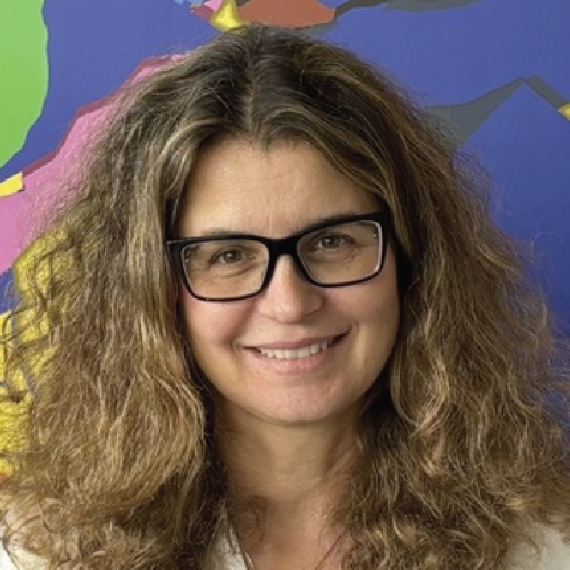
Director, UCI CalIT2
Professor, Electrical Engineering and
Computer Science, UCI

Director, UCR CalIT2
Associate Professor, Electrical and Computer Engineering, UCR

Associate Director, Qualcomm Institute
Professor of Music, UC San Diego

Chief Strategy and Governance Officer, CalIT2

UC campus locations:
San Diego (Qualcomm Institute), Irvine, Riverside
The State of California issues a Request for Proposals for the California Institutes for Science and Innovation to create “world-class centers for scientific discovery that fuels innovation, and for education integrated into the cutting-edge research that will train future scientists and technological leaders.” In November, three winning centers are announced, including CalIT2. (The next year, a fourth center is added.) The centers receive approximately $100 million each in startup investments from the State, on the condition they raise at least twice as much from other sources.
UC Irvine debuts its state-of-the-art CalIT2 facility. The 120,000-square-foot, four-story research building contains a 3,700-square-foot clean room for micro- and nano-fabrication and materials characterization, as well as a separate bioMEMS (micro-electro-mechanical systems) clean room for research on biomedical micro-devices. Other features include a large-scale visualization laboratory, a network laboratory, and labs for optical devices, nanotechnology measurement and media arts. Later, the building adds a Bio-Organic Nanotechnology clean room (2007), Laboratory for Electron and X-ray Instrumentation (2012), student and smart-technology makerspaces (2015), and Data Engineering ThinkTank (2019).
Atkinson Hall, named in honor of former UC President Richard C. Atkinson, opens on the UC San Diego campus as the headquarters of both CalIT2 and its San Diego division. The 215,000-square-foot building, which would win several awards for its design, includes clean rooms for nanofabrication, digital theaters for new media arts and scientific visualization, test and measurement labs for circuit design, smart spaces for experiments in augmented reality, and testbeds for wireless and optical communications. The building continues to evolve over the years with new facilities including art exhibition space Gallery QI (2008), a series of large-display visualization technology installations, and the Magnetoencephalography Center (2023).
CalIT2, UC San Diego division, changes its name to “Qualcomm Institute” in recognition of support from Qualcomm, Inc. and its affiliated Qualcomm Foundation; by that time their gifts to CalIT2 totaled almost $26 million.
UC Office of the President announces the expansion of CalIT2 to include UC Riverside as a third campus partner in the multidisciplinary coalition, joining founding members UC Irvine and UC San Diego and opening new opportunities for collaboration.
Ramesh Rao is the director of the Qualcomm Institute, University of California San Diego division of the California Institute for Telecommunications and Information Technology (Calit2). In 2004, he was appointed the first holder of the Qualcomm Endowed Chair in Telecommunications and Information Technologies in the department of Electrical and Computer Engineering of the Jacobs School of Engineering at UC San Diego, where he has been a faculty member since 1984. Prior to becoming the Calit2 UCSD division director in 2001, he served as the director of UCSD’s Center for Wireless Communications (CWC). In addition to directing Calit2 UCSD, Prof. Rao is involved on a day-to-day basis with a wide variety of interdisciplinary and collaborative research initiatives, leading several major projects at Calit2. He has been a lead investigator on dozens of major federal-, state-, foundation-, defense-, and industry-funded grants, including the NIH-funded Wireless Internet Information System for Medical Response in Disasters (WIISARD), Self-Scaling Systems for Mass Casualty Management (WIISARD SAGE), and the Multimedia Telemedical Diagnostic System (STRokE DOC), the NSF-funded Responding to Crises and Unexpected Events (RESCUE) and ResponSphere projects, multiple projects involving cognitive networking, as well as leading several international collaborations. He has authored more than 230 peer-reviewed technical papers on a wide range of research topics in wireless communications including architectures, protocols, performance analysis of computer and communication networks, adaptive systems, energy-efficient communications, disaster management applications and health-related applications, among others. He is currently engaged in numerous projects to bridge emerging technologies with medicine and healthcare and investigating the power of utilizing information technologies to enhance, even transform, healthcare resources, knowledge bases, and outcomes.
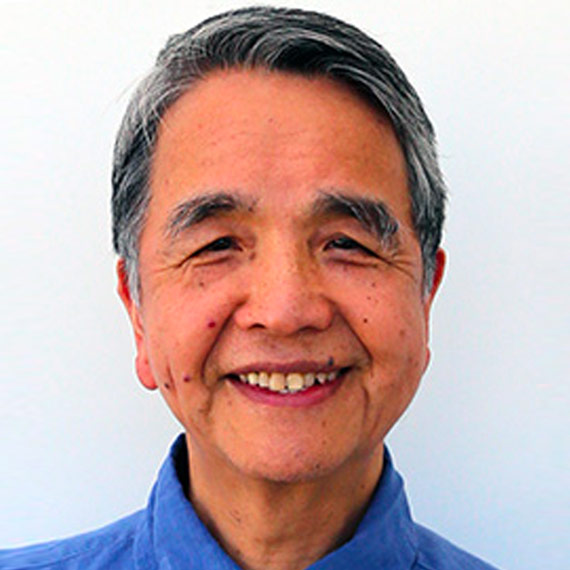
G.P. Li is a professor at the University of California, Irvine, with appointments in three departments: Electrical Engineering and Computer Science, Chemical Engineering and Materials Science, and Biomedical Engineering. At UCI, he also serves as division director of the California Institute for Telecommunications and Information Technology (Calit2) and director of the Integrated Nanosystems Research Facility in The Henry Samueli School of Engineering. Li holds 18 U.S. patents, has 15 patents pending and has published more than 280 research papers involving microelectronic technologies, microwave circuit design, Micro-Electro-Mechanical Systems (MEMS) for communication and biomedical instrumentation applications, and bio-nano-IT technology. He received his bachelor’s degree in electrical engineering from National Cheng Kung University (NCKU) in Taiwan, and his master’s and doctorate degrees, also in electrical engineering, from UCLA. During his tenure as a research staff member and manager of the technology group at IBM’s T. J. Watson Research Center (1983-1988), Li worked in the area of VLSI technology and led a research/development team to transfer the technology into the marketplace. In 1987, he chaired a committee charged with defining IBM’s semiconductor technology roadmap beyond the year 2000. A member of numerous technical committees at professional conferences, Li was chair of the Taiwan VLSI Technology, Circuit, and System Conference in 2006. He also served as chair of the executive committee for electronics manufacturing research and new materials at the University of California. Li received an outstanding research contribution award from IBM (1987), two outstanding engineering professor awards from UCI (1997 and 2001), the UCI Innovators Award (2005), best paper award from the ITC International Telemetering Conference (2005), and outstanding Asian American and Pacific Islander Community Leaders and Role Models award by the Asian Business Association of Orange County (2009). Li has been involved in several startup companies as a co-founder or member of the technical advisory board. Currently, he directs TechPortal, a technology business incubator housed at the UCI division of Calit2, which supports and nurtures young companies and university researchers commercializing their technologies. His current research interests focus on developing technologies for efficient energy utilization and consumption, and e-health.
Shahrokh Yadegari, composer, sound designer, and producer, has collaborated with such artists as Peter Sellars, Robert Woodruff, Ann Hamilton, Christine Brewer, Gabor Tompa, Maya Beiser, Steven Schick, Lucie Tiberghien, Shahrokh Moshkin Ghalam, and Siamak Shajarian. He has performed and his productions, compositions, and designs have been presented internationally in such venues as the Carnegie Hall, Royce Hall, Festival of Arts and Ideas, OFF-D’Avignon Festival, International Theatre Festival in Cluj Romania, Ravinia Festival, Ruhr-Triennale, Vienna Festival, Holland Festival, Tirgan Festival, Forum Barcelona, Japan America Theatre, The Pulitzer Foundation for the Arts, the International Computer Music Conference (ICMC), the Institut für Neue Musik und Musikerziehung (Darmstadt), Judah L. Magnes Museum in Berkeley, and Contemporary Museum of Art, San Diego.
Yadegari holds a B.S. in Electrical Engineering from Purdue University, a master’s in media arts and sciences from MIT’s Media Lab, and a Ph.D. in music from University of California San Diego. He has worked as a unix kernel programmer at such companies as Interactive Systems Corporation, Sun Microsystems, and ICL Inc. He has also worked at Institut de Recherche et Coordination Acoustique/Musique (IRCAM), and is one of the founders and the artistic director of Kereshmeh Records and Persian Arts Society, organizations dedicated to the preservation and dissemination of Persian traditional and new music. Yadegari is currently on the faculty of the department of Music at UC San Diego, and at the Qualcomm Institute he directs two groups, Sonic Arts Research and Development and the Initiative for Digital Exploration of Arts and Sciences (IDEAS).
Ileana’s career focuses on the successful impact between technology, policy, nonprofits, philanthropy and government. She has led social impact initiatives in tech at Google reaching net zero and supplier diversity goals as the Global Lead for Strategy & Operations in Procurement Responsibility; partnered with international health ministers to promote, launch and adopt Google | Apple | UCSD COVID-19 Global Exposure Notifications app; and worked with regulators to improve Google’s products by partnering to provide transparency for Google’s Content Trust & Safety team. Passionate about providing pervasive internet access and educational opportunity for all, Ileana secured government partnerships, developed internet policy for Google Fiber and served as the state director of government and regulatory affairs for Cox Communications CA leading government, community, public affairs, communications and national escalations teams. Prior to her tech career, Ileana held careers in foundation grantmaking at Catalyst, in community development as a long range land use planner for the City of Encinitas and as a community librarian in San Diego.
In 2023, Ileana was appointed by the California State Senate to serve on The California Organized Investment Network (COIN), which partners with community development organizations to source and structure financially sound investments promoting social and environmental impacts, advising insurers to invest in these investments in underserved California communities. Ileana is Chair of Trustees for the Museum of Us and Community Advisor to the Chancellor of the University of California, San Diego. She has provided volunteer leadership as Chair of the Board and capital campaign member of Ocean Discovery Institute, Board of Governors of The San Diego Foundation, and Advisory Board of the University of San Diego’s Nonprofit Institute. She was an appointed official on both the City of San Diego’s International Affairs Board and San Diego Public Library Commission. She is a graduate of Hispanas Organized for Political Equality, LEAD San Diego and was twice named Woman of the Year for California’s 80th Assembly District (2016 and 2017). In 2021, Ovalle received the Ring of Honor Award for MANA’s National Latina Leadership Organization and in 2023 CA Senate President Pro Tem Toni Atkins recognized Ileana’s outstanding community leadership by naming her a 2023 Woman of CA Senate District 39.
Ileana is a first-generation American, the eldest daughter to Ileana Sr., an immigrant from Guatemala, and a Puerto Rican father. Ileana earned her M.A. in Nonprofit Leadership & Management from the University of San Diego, B.A. in Public Administration & Urban Planning from San Diego State University, a Fundraising & Development certificate from UC San Diego Extension. Ileana was born and raised in San Diego and annually seeks out world travel to experience culture, local artisans, food, people, adventure and UNESCO World Heritage sites.